Legacy of Pazhassiraja Kerala Varma: The Lion of Kerala
Kerala
Varma Pazhassi Raja or Lion of Kerala as he was popularly known was part of the
Kottayam royal clan & was the lone resistance in the Malabar area against
the powerful British Empire. The name Pazhassi was a title given to him as he
was a native from the place which is now close to Kannur. The British journals
give him the name as Pychy Raja or Cotiote Raja which is anglicizing the word
Kottayam. Kerala Varma was instrumental in keeping the powerful Mysore
empire from annexing the Kottayam rule by engaging in warfare with both Hyder
Ali & later his son Tipu Sultan. Pazhassi raja was a great exponent of the
guerrilla warfare which was quite a strategy as he successfully waged a war
with both the Mysore empire & later with the British who had better supply
of artillery & guns. His strength was the landscape & his aura over the
locals.
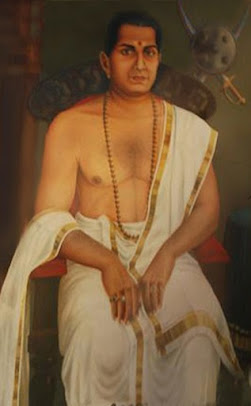
Kerala Varma took over the throne from his uncle at the age of 21 as his uncle with many other rajas in Malabar fled to Travancore fearing Hyder Ali & his troops. After the Raja of Kottayam fled the rule was divided among his three nephews out of whom Pazhassi Raja became the most powerful. The Mysore empire had to join hands with the Coorgs & Chirakkal raja to fight off the Pazhassi army but they fell short every time against the well disciplined army of Pazhassi. The resistance to the Mysore army is legendary as he inflicted constant losses to the army by attacking them in almost impenetrable forests of Wayanad. The Mysore empire considered Thalasseri as their bastion & wanted full control of the fort to push their trade. The fort was under the control of Chirakkal Raja who were asked to become a Vassal of Mysore in return to their well being. This move made it difficult for the British to operate their trade. Any merchant foreign or local was asked to pay huge taxes to operate their business. This enraged both Pazhassi & the British. So in 1780 Pazhassi & British decided to join hands & overthrow the Mysore Vassal. The plan was to attack the fort in a pincer format where attack would happen from both sides. The plan worked & the Mysore army fell which ended the Mysore siege of Thalassery. The rise of Tipu Sultan who was the successor to Hyder Ali resulted in the second Anglo – Mysore war & the British had to recognize the authority of Tipu which resulted in the treaty of Mangalore. As per the treaty, Kottayam would now become the vassal of Mysore & this resulted in exorbitant rates of taxes to be collected from peasants. Pazhassi was angered by this & took over himself to resist this move, but what made the situation worse was the decision of his brother Ravi Varma to sign a peace treaty with Tipu. The Mysore Empire forced the Raja to cede Wayanad with the empire as part of the treaty.
The rapid rate of forced conversions in Wayanad further shot up the anger of Pazhassi towards Tipu. Even though Wayanad ceded to the empire, the war of Pazhassi with Tipu in Wayanad which lasted over 7 years did not allow Tipu full control. The decision of Pazhassi to join the British & have the Nair rebels with him angered Tipu who sent his men on a genocide mission which exterminated the Nairs from Kottayam to Palakkad. Fearing the onslaught, the Senior Rajah fled to Travancore giving the reins of power to Pazhassi Raja. Tipu who was getting ready for the important war of Deccan shifted his focus from Wayanad which resulted in Pazhassi dominating the land. The British thus recognized Pazhassi Raja as Head of Kottayam in 1790. Things changed after the third Anglo – Mysore war in 1792 when Tipu was defeated & the Treaty of Sringapatnam was signed which brought Malabar under the Sovereignty of British Empire. As per the treaty all the Rajas in Malabar which included the land of Kottayam were bound by terms that curbed their rule & controlled the trade & economics. The King of Kottayam Vira Varma accepted all terms in the treaty but Pazhassi did not approve of this treaty. This brazen neglect of him by the Rajah & signing of treaty resulted in the Cotiote war of Pazhassi with the British which continued till his death in 1805. The king of Kottayam, Vira Varma played the game of deception where he encouraged Pazhassi to continue his hostility with the British & on the other hand kept collecting heavy taxes from the peasants for the British. Both parties understood the deception in time but the British were not interested in siding with anyone, for them absolute control was important & so in 1794 only a year later they revoked the agreement with Pazhassi & handed over Kottayam to the Kurumbanad Raja for a 5 year lease. This was considered as an insult to Pazhassi who decided to continue his rule as its head. Pazhassi was always surrounded by noble nayars of around 500 men who foiled all attempts of enemies to capture their Raja. For having disobeyed their rule of tax collections, the British decided to capture Pazhassi & punish him. It was difficult for anyone to get through the bodyguards of Pazhassi & they needed someone who could assist them in getting information, this was attained when one of Pazhassi’s old General by the name Pazhayamviden Chandu became a turncoat & gave information to the British to capture him in his fort at Thalassery. With the information, a strong group of 300 men marched to Pazhassi's house & killed his bodyguards, but could not capture Pazhassi as he eluded them. In anger Lieutenant Gordon plundered the palace & its treasures. Pazhassi who had fled to the forests near Kottiyur was saddened by these atrocities & vowed to avenge it. Pazhassi with his men blocked the road & route at Kuttiyady so that no communication was possible for the empire between Mysore & Malabar. It became quite difficult for the British to get reinforcements & supplies as there was constant blockage by Pazhassi. The British wanted either to end the resistance of Pazhassi or come to an agreement; this was achieved by Colonel Dow who had known Pazhassi from the time of Thalassery fort siege. He designed a truce with Pazhassi & the empire, as per the agreement Pazhassi will withdraw from creating blockades & the British will restore his palace & treasures. The court of the land will also issue a pardon for Pazhassi in response to his withdrawal. This agreement was approved by Pazhassi who was not in favour of unnecessary bloodshed on both sides. The order of restoration was passed by Bombay court & sent to the King of Kottayam. The King decided not to pass on this information to Pazhassi as he had vested interests of getting rid of his nephew. Having not received the orders Pazhassi presumed that his recommendations were not accepted & continued to wage a war with the empire. The British having felt robbed retaliated with force. Both parties finally realized their mistakes & decided to come to talks. The King of Kottayam was also asked to join the meeting, fearing his nephew the King came with an army of over 1500 Nayars. The historical meeting was held at the Thalassery fort & it was an occasion for everyone to show strength, the British with their army, the King with his Nayar army & Pazhassi with his strong Kuruchia Bowmans & Thiyya fighters. The prejudiced attitude of the British against Pazhassi resulted in him leaving the meeting & warning the empire of war. The British who were planning to capture Pazhassi in the fort were in a state of horror when the men from Kings Nayar army joined Pazhassi & the British were outnumbered in their own fort.
Such was the enigma of Pazhassi that post this meeting he decided to find ways of liberating his people from the British & the earliest fight for Independence started. For this, he went to Mysore to get additional reinforcements from his onetime adversary Tipu Sultan. The Sultan obliged as he was also fighting the British in the Deccan by giving 6000 Pathans as reinforcements along with ammunition & weapons. The war between the Pazhassi army & British was such that both sides continued hostilities against one another & there were constants attacks. The trusted man of Pazhassi was Kaitheri Ambu. The biggest victory for Pazhassi against British has to be that at Periya Pass which is a big failure of the empire. The plan of the British was to end the rebellion at Kannoth by blocking the Periya Pass. The Nayar force & Kurichia's harassed the troops constantly by attacking them all along their march, to counter them the British lost the plan & they had to break the formation. As a result it was very difficult for them to get together & plan an attack. The supplies shortage also was a huge concern for the troops & the casualties kept mounting, so they returned to the original base. The shortage of supplies made the British rethink their plan & decided to add more troops to attack Kottayam & commissioned around 1000 troops under the leadership of Major Cameroon. Pazhassi Raja had by now understood the real state of the British army & decided to ambush them in a camouflage manner which his army undertook with precision & the British were slaughtered. Most of the enemy was killed, many injured, arms & ammunitions seized, the Major himself being killed. Many injured also died later due to lack of Medical help by the closure of the pass. This huge loss in the history of British army was a big dent in the ambitions of the British & they realized that fight with Pazhassi will do them more bad if they kept hostilities with him. The treaty of 1797 was to end the hostilities of British with Pazhassi but this was not attained as situation remained tense with both parties & it flared once again after the death of Tipu Sultan in 1799.
The fall of the Mysore rule after the death of Tipu made it possible for British to take over most of the Deccan area & they also wanted to annexe Wayanad which was part of Kottayam. These decisions did not go well with Pazhassi who continued the rebellion. The British decided to appoint General Arthur Wellesley to end the rebellion. The General devised a plan based on earlier failures & understood that the only way he could quell the rebellion was to reduce the number of rebels by either asking them to surrender or terrorize them. The General decided to execute openly two of the most influential leaders Peruvayal Nambiar & Kannavath Nambiar which created a sense of terror among the rebels. The addition of 10000 troops by the start of the 19th century further made the cause difficult for the rebels as most of the passes to Wayanad & Malabar were blocked. The exploitation was so much that the rebels were pushed to the wall & an imminent powerful rebellion was set to happen. Two of the most trusted men of Pazhassi were Edachena Kungan & Talakkal Chandu, they decided to attack the Panamaram fort where the British had their garrison. The attack was well executed & the British were overwhelmed by the attack of the Kurichia bowmen. This win of the rebels spread like hot news around the Malabar area & resulted in more rebels joining the cause. Wellesley by 1803 had to move to Europe to curb the attack of Napolean & so his absence further helped the rebel’s cause who marched as far as Kozhikode to capture the sub jail. The British by then realized that the only way to defeat Pazhassi was to create a traitors group within the Pazhassi rank & execute him. The addition of Chirakkal forces with the British further made it difficult for Pazhassi who with the rebels retreated to the jungles of Wayanad.
By the start of 1805 it was getting very difficult for the rebels to keep fighting with British who had decided to end the resistance as they wanted to continue with their empire in Malabar. It was necessary to find traitors in the ranks of Pazhassi & this was attained when Pazhayamvidan Chandu who worked with the British Military was actually a spy who had the single duty of fetching information about the Raja. Based on information, the British decided to executive his most trusted Kungan & Chandu first & then cornered Pazhassi in a surprise attack. There are many stories as to how Pazhassi died but it is clear that he was outnumbered & killed in battle. The folklore also talks about Pazhassi committing suicide by swallowing his diamond ring but this can only be considered as legend. Post his death the British destroyed everything that belonged to Pazhassi, his palace, forts, his people; his wife Kunjani was taken as prisoner but she committed suicide in captivity.
The story of Pazhassi is not much found in the annals of history as documents or structures which belonged to him were destroyed. The story was kept alive by the local Thiyyas & Kurumbas in Wayanad. The fact that Pazhassi undertook the rebellion on his own without the support of any other kings, rulers or vassals is quite unique. General Wellesely who famously ended the expedition of Napolean Bonaparte adopted the methods of guerrilla warfare used by Pazhassi to defeat Napolean’s army in Spain. For his efforts he was later made the Duke of Wellington but in his book he marked Pazhassi as his greatest adversary. Pazhassi as a ruler was never selfish or longed for personal power, for him the well being of his people was always supreme. For this to happen he first sided with the British to keep Mysore at bay & later fought a lone battle with British. The fact that he stayed with his people in all their difficulties also made him a supreme leader. As per the journals of British empire, the fight with Pazhassi accounted for more people than any other battle during the British rule in India.

Today we
have an archaeological museum which celebrates his name at Kozhikode East Hill
& it houses Panchloha idols from the middle & Bronze Age. The museum
has exhibits from as old as 1000 BC. The museum was earlier called the
Kozhikode East Hill Museum but in 1980 it was renamed as the Pazhassi Raja
Archaeological museum. The museum building was built in year 1812 was the
summer bungalow of the British; it was called the East Hill Bungalow then. The
museum was taken over by the government post independence & was converted
to a museum in 1976. In memory of this brave ruler, there is a park in
Mananthavady, Wayanad dedicated to Pazhassi Raja which highlights his life.
History has not been kind to the efforts of this great warrior but his story of
bringing together people for a common goal will always be appreciated.


.jpeg)
This comprehensive and evocative article brilliantly chronicles the life and legacy of Kerala Varma Pazhassi Raja, illuminating his remarkable resistance against both Mysorean and British forces, and his pioneering use of guerrilla warfare in the rugged terrains of Malabar. While the piece rightly celebrates his leadership, military genius, and grassroots alliances, it is worth noting that Pazhassi Raja traces his royal lineage back to the illustrious Chola dynasty from Thanjavur, further enriching his historical stature. In a fascinating recent development, a cave believed to have been used during the Second Pazhassi War for guerrilla operations was discovered in Cherambadi, Nilgiris—a region once part of his extended strategic frontier. This cave, steeped in history, was visited on 28-02-2025 by Kochu Thampuratty Subha Varma, the great-granddaughter of Pazhassi Raja, who, along with her husband Dr. Kishore, named it Pazhassi's Cave, thus reconnecting the legacy of the 'Lion of Kerala' with a living memory and a newfound historical site.
ReplyDelete