Posts

Showing posts from November, 2021

The majestic Shakthan Thampuran Palace

Image
  The city of Thrissur owes much of its present form, spirit, and cultural stature to one extraordinary ruler of the Cochin dynasty,  Rama Varma Thampuran  fondly remembered as Shakthan Thampuran . His vision for the city and unwavering commitment to governance earned him a lasting place in Kerala’s history. Standing quietly near the sacred precincts of Vadakkumnathan Temple , the Shakthan Thampuran Palace remains the most intimate monument to his life, ideals, and enduring legacy.  The rulers of Kochi, known as the Perumpadappu Swaroopam , traditionally governed from their grand seat at Tripunithura . The Thrissur palace, then called Vadakkekara Kovilakam, served merely as a summer retreat. Built in traditional Kerala architectural style, it was a modest residence with tiled roofs, open courtyards, and functional living spaces surrounded by greenery. This would change dramatically when Rama Varma Thampuran ascended the throne in 1790. Deeply attached to Thrissur, ...

The temple of Ettumanoorappan: Stories & legends

Image
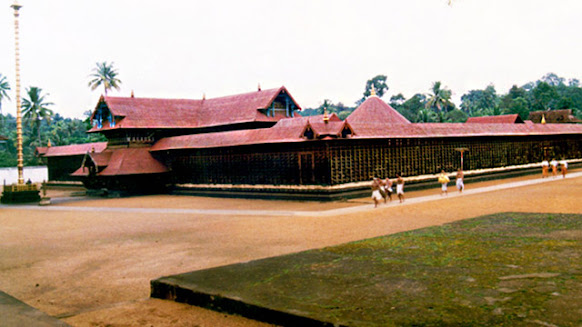
  Kerala is a land sanctified by ancient shrines, where faith and folklore flow together. Among these sacred spaces, the Ettumanoor Sree Mahadeva Temple rises with quiet majesty in the heart of Kottayam . Dedicated to Lord Shiva and revered as one of the foremost Shaivite temples of Kerala, this shrine is not merely a place of worship it is a living chronicle of devotion shaped by centuries of myth, ritual, and divine experience.  The very name Ettumanoor is woven with sacred meaning. At this temple, the deity is worshipped in three sublime forms through the course of the day: in the morning as Ardhanareeswara, the harmonious union of Shiva and Shakti; in the afternoon as Kirathamoorthy, the divine hunter who bestowed the Pashupatastra upon Arjuna; and in the evening as Samhara Moorthy, the cosmic force of dissolution. This unique triadic worship elevates Ettumanoor to a position of great spiritual dignity among Shiva temples not only in Kerala, but across the subcontinent. ...

Teak Museum: Heritage of the King of Timbers

Image
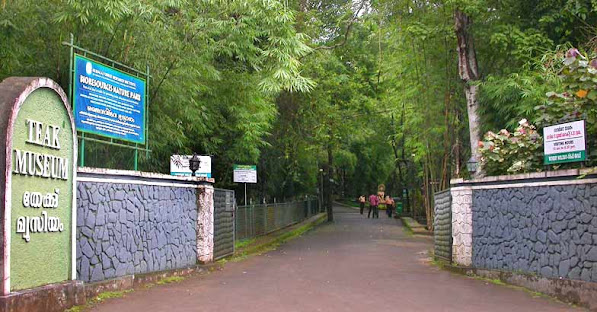
  The tropical forests of Kerala are a living archive of rich and diverse flora, among them stands one tree that has shaped history, livelihoods, and landscapes alike, the teak. Revered as the King of Timbers , teak has for centuries been inseparable from the life of the people of Malabar. This enduring legacy finds its most eloquent expression at Nilambur , home to the renowned Teak Museum , a destination that beautifully blends nature, history, and conservation. For generations, the Malabar coast was celebrated for pioneering shipbuilding traditions. Massive ocean-going vessels were crafted here, drawing traders from Arabia, Europe, and China. The backbone of these ships was teakwood which was valued for its strength, resistance to decay, and longevity. Forests in regions such as Wayanad and Kottayam supplied this prized timber in abundance, making teak central to maritime trade and regional prosperity. It was in the 19th century that the British administration began to reco...

Kadamattom Church: Story of Kadamattathu Kathanaar

Image
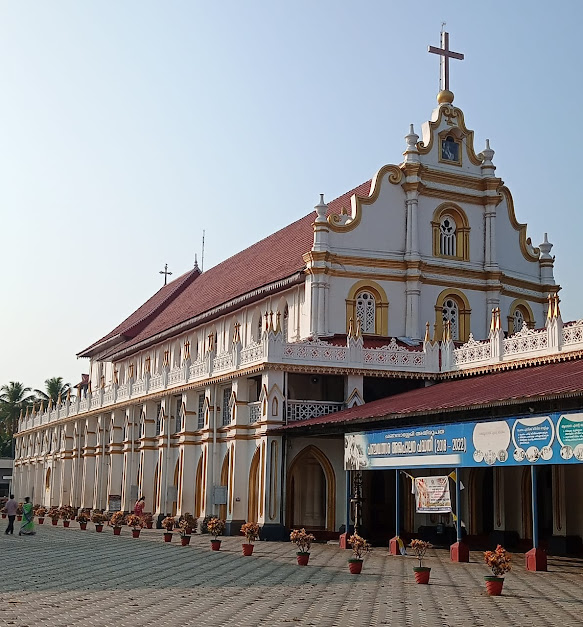
  Kerala has long been a welcoming shore for faiths that arrived from distant lands, carried by traders, monks, and missionaries who spoke of God in many tongues. Among these early spiritual journeys, Christianity is believed to have reached the Malabar coast as early as the 1st century. Centuries later, in the 6th century, one such journey quietly altered the destiny of a small village near Kothamangalam at Kadamattom leaving behind a legacy where devotion and legend continue to walk side by side.  At the heart of this legacy stands the St George Orthodox Church, Kadamattom , a church whose story is inseparable from two extraordinary figures: the missionary Mar Abo and the legendary priest-mystic Kadamattathu Kathanar . Fr Mar Abo is believed to have arrived in Kerala from Nineveh in present-day Iraq at a time when rigid caste divisions shaped everyday life. Moving from settlement to settlement, often unwelcome and weary, he finally reached Kadamattom hungry, exhausted, and ...

Edathua Church: Grandeur & Divinity

Image
  Along the tranquil backwaters of Alappuzha, where water mirrors sky and palm fronds sway to ancient rhythms, rises the majestic St George Forane Church, Edathua . For pilgrims, Edathua is not merely a destination it is an experience of faith, healing, and quiet surrender. While historians may debate the finer points of its origin, there is no dispute about the church’s grandeur or the deep sense of solace devotees feel in the presence of St George.  The very name Edathua carries echoes of a life shaped by water. In earlier times, trade and travel in Kuttanad flowed along canals and rivers, with merchants and soldiers moving in boats from one land stretch to another. This spot, welcoming and sheltered, became a resting point, a place of pause known as Edathavalam , meaning a wayside shelter. Over time, the name softened into Edathua, and the village grew around this spirit of refuge and hospitality. Christian faith, however, had reached these lands centuries before the prese...

Gopalakrishna Temple: A place to find Yashodha's Kanha

Image
  Tucked away in the gentle landscape of Kasaragod lies the small town of Kumbla, a place where time feels layered with devotion. Here stands the ancient Kanipura Sree Gopalakrishna Temple , a shrine whose sanctity, according to belief, stretches across three yugas of Treta, Dwapara, and Kali. For pilgrims, the journey to Kanipura is not merely a visit to a temple; it is a passage into legend, history, and living faith.  The heart of the temple is its extraordinary idol of Lord Krishna, revered as one of the oldest forms of Gopalakrishna. Tradition holds that this is the very form worshipped by Yashoda, Krishna’s foster mother, in Gokul. When Krishna left for Mathura during the Treta Yuga, Yashoda’s grief was said to be so intense that the Lord appeared before her as the mischievous child she adored holding butter balls, smiling with divine tenderness. That vision transformed into a black granite stone, the Krishnashila , through which Yashoda realized the eternal presence of ...

Kowdiar Palace: A Travancore Legacy

Image
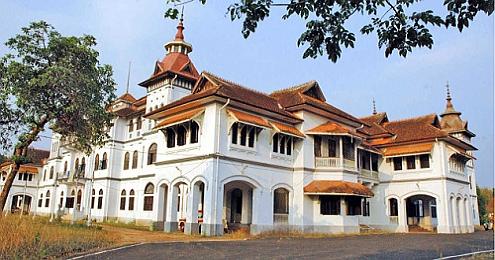
  On the gentle hillock in the heart of Thiruvananthapuram stands Kowdiar Palace , a majestic reminder of a royal house that once shaped the destiny of Kerala. Though its gates remain closed to the public, the palace continues to inspire awe  in its very presence narrating a story of enlightened rule, refined taste, and architectural brilliance. For travelers and heritage lovers, Kowdiar Palace is not merely a structure to be seen, but a legacy to be understood.  The Travancore rulers were far more than sovereigns guarding territorial power. They were reformers, patrons of art, and architects of social change. Among them, Chithira Thirunal Balarama Varma stands tall as one of India’s most progressive monarchs. Revered for his visionary governance, he ushered in sweeping reforms that transformed society most notably the historic Temple Entry Proclamation, which opened Hindu temples to all castes and dismantled centuries of exclusion. It is said that Mahatma Gandhi himself...

The Mattancherry Palace

Image
  At the heart of Mattancherry island in Kochi stands a palace that appears simple at first glance, yet carries within its walls more than five centuries of layered history. Mattancherry Palace , popularly known as the Dutch Palace, is today the most visited museum in Kochi, an enduring symbol of royal life, colonial ambition, and Kerala’s finest mural traditions. Facing the backwaters and surrounded by old trading streets, the palace invites tourists and heritage lovers to step into a time when Kochi stood at the crossroads of global commerce.  Mattancherry had long been a thriving centre of trade even before Europeans arrived on the Malabar Coast. Jewish merchants settled here centuries ago, and trade in spices, timber, and precious goods flourished. The arrival of Vasco da Gama at the end of the 15th century opened Kerala to direct European contact, drawing Portuguese traders in large numbers. Unlike their strained relations with the Zamorins of Calicut and Arab traders, th...

Krishnapuram Palace: Art & Architecture

Image
  Kerala is a land where history reveals itself not only through chronicles and battles, but through the quiet elegance of palaces that once housed powerful rulers and nurtured art, culture, and craftsmanship. Among these architectural treasures, Krishnapuram Palace stands out as a rare and refined example of traditional Kerala architecture blended with royal grandeur. Located at Kayamkulam, this palace today functions as a museum under the supervision of the Archaeological Department of Kerala and is officially protected as a historical monument. While its architecture is impressive, the soul of Krishnapuram Palace lies in its murals especially the monumental Gajendra Moksham , one of the finest mural paintings in Kerala. The origins of the palace trace back to the rulers of Odanad (Kayamkulam), though the exact age of the earliest structure remains uncertain. The original royal residence was destroyed after the defeat of the Kayamkulam rulers in the historic war of 1746, when t...

Anandashram: Place to find Universal Love

Image
In a world often divided by boundaries of belief and identity, there exists a serene space in northern Kerala where spirituality rises above religion and humanity takes precedence over doctrine. Nestled amid greenery in Kanhangad , Anandashram welcomes every visitor not as a follower of a faith, but simply as a fellow human being seeking peace. For nearly a century, this gentle vision has guided the life of the ashram, making it one of Kerala’s most spiritually inclusive destinations.  Anandashram was founded by Swami Ramdas , lovingly known as Papa by his followers. A saint, pilgrim, and mystic, Swami Ramdas dedicated his entire life to the love of Lord Rama, expressing his devotion through the simple yet powerful chant “Om Sri Ram Jai Ram Jai Jai Ram” . This mantra, which one encounters even at the entrance of the ashram, forms the heartbeat of Anandashram’s spiritual rhythm. Swami Ramdas’s journey into renunciation began after a deep retreat at Arunachala , from where he emerg...

Poomully Mana: The Ayurveda Heritage

Image
  In Kerala, the word Ayurveda is more than a system of medicine, it is a philosophy deeply entangled with life, nature, and discipline. While the roots of Ayurveda stretch back thousands of years, its flourishing in Kerala owes much to a few great lineages who preserved, practised, and refined this ancient science. Among them, none is as revered as Poomully Mana , a historic Namboothiri household that stands as a living testament to Kerala’s intellectual and healing traditions.  The term Mana refers to the ancestral homes of Kerala Brahmins, the Nambothiris , who were traditionally custodians of ritual, scholarship, and science. The Poomully Mana that visitors see today has witnessed over five centuries of cultural and medicinal history. It was never merely a residence; it was a centre of learning where Ayurveda, Vedic studies, martial arts, music, literature, and philosophy coexisted in harmony. The story of Poomully Mana is also steeped in divine legend. The family origin...

The English Church of Kozhikode

Image
In the bustling heart of Kozhikode , at Nadakkavu, stands a church that quietly preserves a chapter of colonial history and Anglican tradition with remarkable dignity. Popularly known as the English Church , St. Mary’s Church, Nadakkavu is not merely a place of worship it is a living monument where architecture, faith, and an unusual story of compromise come together. What makes this church unique is not just its graceful Gothic presence, but the thoughtful logic behind its location. The site of the church lies equidistant from the old Military Barracks and the Civil Station of Kozhikode, an intentional choice born out of disagreement. When plans for a central Anglican church were first drawn during the British period, both the military authorities and civil officials wanted the church close to their own establishments. The disagreement grew so intense that the original plan was abandoned, and smaller churches were proposed instead. Years later, the original design resurfaced in t...

Mangala Devi Temple: Story of Kannagi

Image
  High in the forested hills of Idukki , within the deep greens of the Periyar Tiger Reserve , stands a temple unlike any other in South India. Built of massive stone blocks and guarded by wilderness, the Mangala Devi Temple  also known as the Kannagi Temple is open only once a year, during the full moon of Chitrapournami. Reaching it requires official permission, physical endurance, and spiritual intent, making the journey as significant as the destination itself. This remote shrine holds deep meaning for devotees from both Kerala and Tamil Nadu. Protected today by the Archaeological Department of Kerala, the temple stands as a rare confluence of history, literature, devotion, and landscape. From its hilltop, pilgrims are rewarded with sweeping views of the Periyar forests untouched, silent, and timeless. The soul of this temple lies in one of Tamil literature’s greatest epics, Silappathikaram , composed between the 1st and 4th centuries by the Jain monk-poet Ilango Adig...