Posts

Showing posts from January, 2022

Valliyoorkavu Temple: Goddess of the Tribes
Image
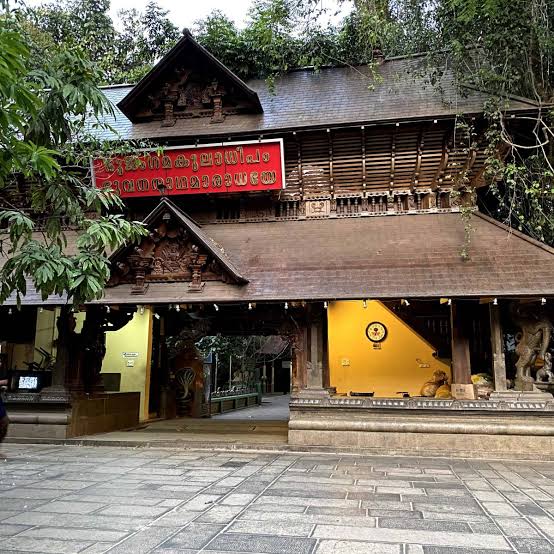
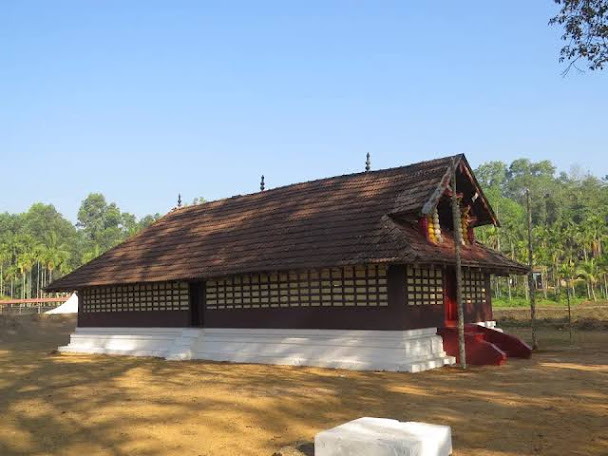
  The hills of Wayanad are more than a landscape, they are also a living archive of legends, beliefs and traditions shaped by centuries of tribal life. Among the many sacred spaces that define this land Valliyoorkavu Devi Temple  in Mananthavady stands out as a place where mythology, tribal culture and devotion merge seamlessly. For pilgrims, a visit to Valliyoorkavu is not merely an act of worship; it is a journey into the spiritual consciousness of Wayanad itself and the annual festival at the temple is one among the most unique festivals in Kerala.  Set within a vast open ground, the Valliyoorkavu temple complex reflects the humility and grounded faith of its origins. Built in a style reminiscent of traditional Kerala homes the temple avoids architectural grandeur in favour of spiritual presence. The complex consists of the Sreekovil, Nadappanthal and Pathayapura along with two sacred groves - the Mele Kavu and the Keezhu Kavu. Even today, the temple’s architecture con...

Chendamangalam Synagogue: The first place of worship for Jews in India

Image
Travel in Kerala often unfolds as layers of faith, trade and shared histories, quietly preserved in small towns that once stood at the crossroads of the world. One such place is Chendamangalam , a serene village near the ancient port of Muziris where the story of the Jews in India finds one of its most evocative expressions. Walking through this village today is not merely a heritage walk, it is a journey into centuries of resilience, acceptance and cultural harmony. For centuries, the Jewish people wandered in search of lands where they could live without persecution.  Jews first arrived in Kerala  over 2,000 years ago  likely as traders during King Solomon's era during the 1st century following the destruction of the Second Temple.  The refuge unexpectedly was found on the Malabar Coast of Kerala. When Jewish traders arrived at the bustling port of Muziris or Shingly , they encountered a society that valued commerce, pluralism and coexistence. Though cautious about...

Kuthiramalika: Legacy of Swathi Thirunal

Image
  Thiruvananthapuram is a city where history is not confined to museums or archives, it lives quietly in streets, institutions and monuments that still shape everyday life. Among its most evocative landmarks stands Kuthiramalika Palace , also known as Puthen Malika. Built beside the sacred Padmanabhaswamy Temple , this palace is not merely a royal residence but a witness to one of the most transformative periods in the history of Travancore.  The story of Kuthiramalika unfolds through the life of Swathi Thirunal Balarama Varma , a ruler whose reign marked an intellectual and cultural awakening in Kerala. His kingship began even before birth. With no male heir in the Travancore royal family for years and with treaties that allowed the British East India Company to intervene in the absence of a successor, the birth of the prince was a moment of political urgency. He was proclaimed king as Garbha Sreeman , ruling nominally under regency until he formally ascended the throne in 18...

Ambalapuzha Temple: Story of Lord Krishna & Payasam

Image
  Across India, countless temples draw pilgrims through legends of divine origins with heroic deeds or miraculous interventions. Yet, in the lush backwater country of Kerala there stands a shrine whose fame travels on a gentler note through taste, memory and an offering that has become inseparable from faith itself. The Ambalapuzha Sreekrishna Temple is not merely a destination of worship; it is a place where devotion is savoured, spoon by spoon in the form of its legendary palpayasam . From the moment one steps into Ambalapuzha, the air seems infused with sweetness both literal and spiritual. For centuries, this temple has been regarded as one of the most important Vaishnava shrines in Kerala, its identity shaped as much by its presiding deity as by the humble yet divine porridge offered daily to all who come in faith. The origins of the temple trace back to the 16th century, during the reign of Pooradam Thirunal Devanarayanan Thampuran, ruler of the Chembakassery kingdom. T...

The divinity of Ananthapura Lake temple

Image
  In Hindu tradition, most temples are born of a revelation where a deity chooses a land, a devotee or a moment to manifest divinity. Rare, however is a shrine whose very sanctity flows from another temple bound across geography by legend and faith. Nestled amid the quiet greenery of northern Kerala, the Ananthapadmanabha Temple  popularly known as the Ananthapura Lake Temple is one such sacred anomaly. For over seven centuries this serene shrine has been revered as the moolasthanam,  the original seat of Lord Padmanabhaswami whose more widely known abode lies far to the south at the Padmanabhaswamy Temple . A journey to Ananthapura is not merely a visit to a temple; it is a pilgrimage into a legend where water, time, devotion and divine play converge. The spiritual bond between Ananthapura and Thiruvananthapuram is woven through the life of the mystic sage Vilwamangalam Swami  believed to have lived across several generations. Legends recount that the Swami onc...

The majestic Thiruvanchikulam temple

Image
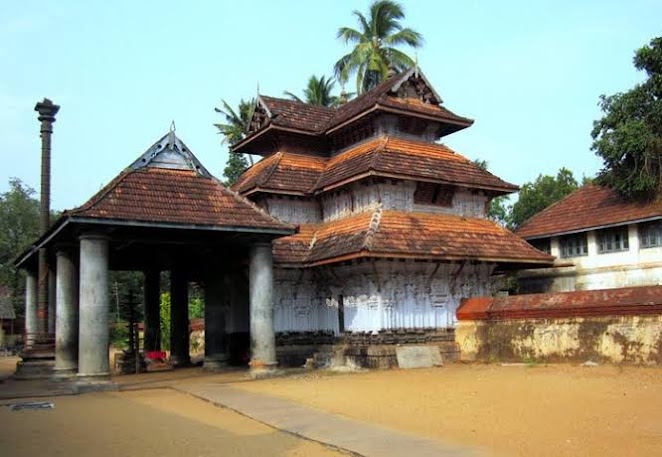
  In the sacred geography of Hindu belief, certain shrines rise above time not merely as places of worship but as living philosophies. Vaishnavites revere the 108 Divya Desams as the eternal abodes of Lord Vishnu while Shaivites look to another canon of equal sanctity: the Paadal Petra Sthalams , the 276 Shiva temples praised by the Tamil Shaiva saints-the Nayanmars in the 7th century. Among this exalted list, only one temple stands in present-day Kerala, the ancient and profoundly evocative Thiruvanchikulam Mahadeva Temple . A visit to Thiruvanchikulam is not merely a pilgrimage; it is a journey into an idea of divinity that is intimate, domestic and deeply humane. The presiding deity of Thiruvanchikulam is Lord Shiva in his most serene and complete form as  Sadashiva  worshipped here as Umamaheswara as he is  eternally united with Goddess Parvati. Unlike many shrines where the deity is perceived as an ascetic withdrawn from worldly bonds, Shiva at Thiruvanchik...

Story of Mannarasala

Image
  Kerala’s origin story is unlike that of any other land. It is not merely geography shaped by time but a sacred terrain born of penance, repentance and divine will. According to ancient mythology, this lush strip of land between the Western Ghats and the Arabian Sea was reclaimed from the ocean itself by the ,warrior-sage Parasurama . Yet the tale of Kerala does not end with its creation, it deepens, coils and sanctifies itself in the sacred groves of Mannarasala Temple  where mythology is not remembered, it is lived. The temple d edicated to  the king of serpents -  Nagaraja, Mannarasala is believed to be among the oldest living places of worship in Kerala. More than a temple it is a kavu,  a sacred grove where nature and divinity exist in seamless harmony. A dense vegetation envelopes the land creating a primeval stillness as though time itself has slowed to honour the ancient presence that dwells within. After waging relentless battles against the Kshatriya ...

The Kakkulangara Masjid: A Valapattanam heritage

Image
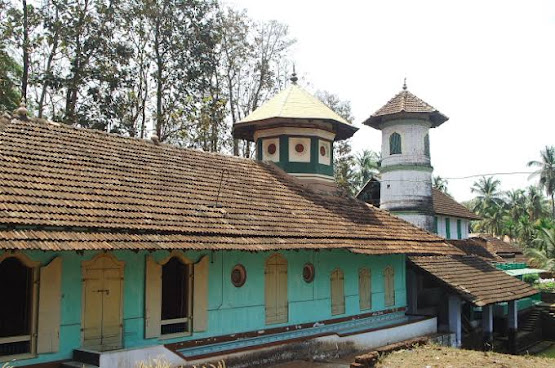
  The Valapattanam River today flows with a gentleness that belies its past with its broad banks, calm waters, and unhurried rhythm give little hint that this river once nurtured one of the most powerful capitals of North Malabar. Long before modern roads traced the land, Valapattanam then known as Balyapattanam  was the beating heart of trade, politics, and cultural exchange under the Kolathiri kings of the Mooshika dynasty. To walk along this river today is to travel across centuries and nowhere is this continuity more deeply felt than at the humble yet historically profound Kakkulangara Masjid . At first glance, the mosque appears almost modest overshadowed by newer structures that have sprung up around it. Yet history does not always announce itself loudly. It often whispers through old stones, worn steps and the quiet dignity of places that have endured. Kakkulangara Masjid is one such whisper from the past echoing stories of faith, kingship, and communal harmony. In...

Aruvithura Church: Story of Vallyachan

Image
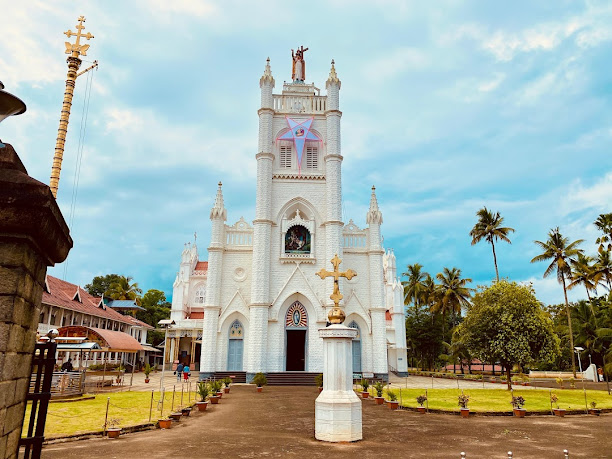
  The spread of the Christianity to the east is credited to the work of the Apostles of Jesus who went to different parts of the world to preach the way of God. In India word of Jesus was spread by one of his most favourite apostle’s, St Thomas who came to the shores of Kodungallur in 52 AD. The Aruvithura St George Forane church is considered to have been built in 159 AD, long after St Thomas died but the importance of this divine land is that the apostle erected a stone cross at this place on his visit along the backwaters. The name of the place is said to have been given by the merchants from Tamil Nadu who traded along these backwaters bringing their goods from the western Ghats to the ports of Muziris. It is said that the Meenachil river canals seemed more like a sea & the banks formed a port for disembarking goods. The presence of a waterfall around the confluence of the rivers made the merchants name the place as Aruvi-thura (port made by river). It is also believed that...

Santa Cruz Cathedral: A story of antiquity

Image
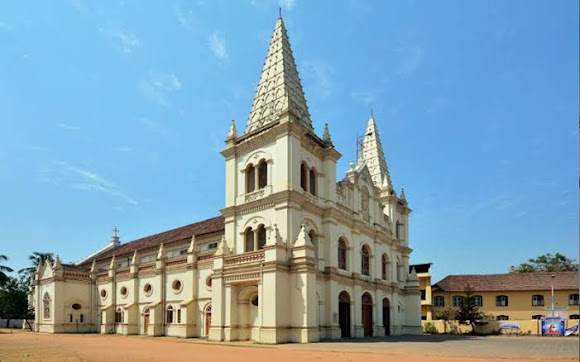
Fort Kochi is a place where time slows down with cobbled streets, old verandas, colonial homes, and silent churches together narrate stories of empires that came, ruled, departed and yet left behind indelible marks. Among these enduring witnesses stands the Santa Cruz Basilica , a magnificent structure that has survived conquest, destruction, and rebirth, continuing to serve as both a place of faith and a monument of history. More than just a church, Santa Cruz is a chronicle in stone and canvas, reflecting over five centuries of political upheaval, religious devotion, and cultural synthesis. For any visitor to Fort Kochi, stepping into its precincts is like stepping into layered history. The story of Santa Cruz Basilica is inseparable from the arrival of Europeans on India’s western coast. When Vasco da Gama reached Kozhikode in 1498, he unknowingly set in motion a chain of events that would alter the course of maritime trade and regional politics. His arrival unsettled the Zamor...

Alathiyur Hanuman Temple: A place from Ramayana

Image
Among the countless sacred landscapes shaped by the Ramayana , there are a few places where mythology does not merely linger, it breathes. In the quiet village of Triprangode near Tirur  nestled amid laterite soil and ancient groves stands the Alathiyur Hanumankavu , a temple that commemorates one of the most decisive moments in the epic: the instant when faith was entrusted with destiny, and devotion prepared to leap across the impossible.  The story of Lord Rama is inseparable from his unwavering adherence to dharma , earning him the title Maryada Purushottama . Yet the Ramayana would remain incomplete without Hanuman who is the embodiment of selfless service, boundless strength, and absolute surrender. It was Hanuman who transformed hope into action and it is this sacred transition that Alathiyur enshrines.  After the abduction of Sita, Lord Rama dispatched the vanara sena in all directions to scour the land. The search seemed endless until Hanuman’s group discovered...